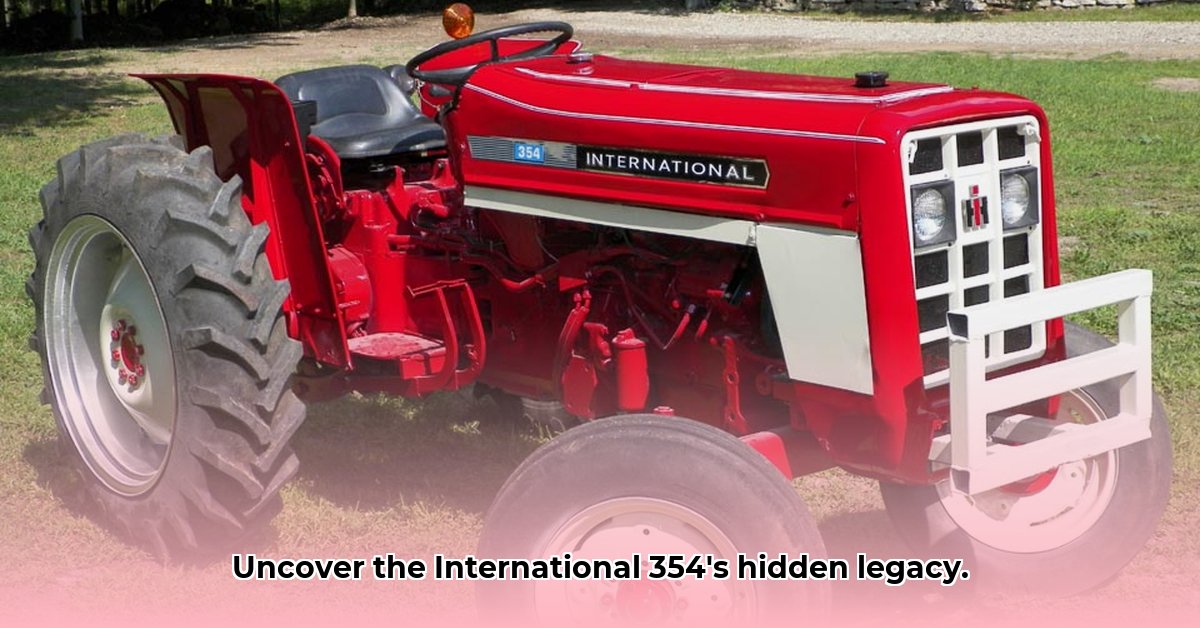
The International Harvester 354: a name synonymous with rugged dependability in the agricultural world of the 1970s. This tractor wasn't known for flashy features, but for its straightforward design, robust build, and surprising power for its size. This article delves into the specifications, history, and enduring appeal of this iconic machine. For more on old IH tractors, see this helpful resource: Old IH Tractor Models.
Under the Hood: Power and Simplicity
At the heart of the IH 354 beat a compact 2.3-liter engine, offering a choice between gasoline and diesel fuel—a practical option reflecting the diverse needs and budgets of farmers at the time. Producing approximately 35 horsepower (a figure that varied slightly based on fuel type and build year), it wasn't a powerhouse, but it provided sufficient muscle for many common farm tasks. Think reliable workhorse, not high-performance racecar. Power transmission was handled by an 8-speed sliding gear transmission—a traditional design for the era, demanding skill but offering proven reliability. The tractor's lifting capacity, estimated at around 2600 kg (approximately 5700 lbs), was remarkably strong given its size and engine output, a testament to efficient engineering. This balance of power, transmission, and lifting capacity likely contributed significantly to its popularity among smaller farms. Was this balance a key factor in its market success? Further research into sales data could provide a definitive answer.
Design and Construction: Function Over Frills
The IH 354's design prioritized practicality. Farmers operated from an open station, maximizing visibility but exposing them to the elements. This reflected the cost-conscious nature of agricultural machinery in the early 1970s. Comfort was secondary to functionality. Its relatively light weight provided excellent maneuverability, a significant advantage in confined spaces or soft soil conditions. The rear hitch, a typical "I" type design of the period, was familiar to most farmers. While newer designs emerged later, the IH 354's design remained effective and durable. How did this design philosophy compare to competitors? This requires in-depth comparative analysis of the era’s tractors.
Comparative Analysis: A Market Perspective
How did the IH 354 fare against competitors like Ford and Massey Ferguson? While definitive conclusions require extensive research into contemporary sales figures and farmer testimonials, its affordability likely played a significant role in its appeal to smaller farms. Its reputation for reliability was undoubtedly another key asset. A tractor that's easy to maintain and repair is invaluable. Ongoing research into archival sales records and period agricultural publications would uncover a more comprehensive picture of its market position.
Legacy and Enduring Appeal
The IH 354 may not represent cutting-edge agricultural technology today, but its legacy within agricultural history is secure. Its simple yet durable design continues to resonate with collectors and enthusiasts. These individuals appreciate its historical significance and rugged character, actively seeking out and restoring these machines. While sourcing parts can be challenging, online communities and dedicated restoration projects ensure the memory of this tractor remains alive.
Key Specifications of the International Harvester 354
| Feature | Specification | Notes |
|---|---|---|
| Engine | 2.3-liter gasoline or diesel | Specific horsepower varied slightly depending on fuel type and build year. |
| Transmission | 8-speed sliding gear | A traditional design common in tractors of the era. |
| Lift Capacity | Approximately 2600 kg (≈5700 lbs) | This is an estimated figure; precise figures are difficult to confirm. |
| Production Years | Approximately 1971-1975 | Some sources list slightly different start and end years. |
The International Harvester 354 stands as a testament to the principles of robust, cost-effective engineering. Its straightforward design was a successful blend of power, durability, and affordability, cementing its place in agricultural heritage. Further research into its sales data and market impact would enhance our understanding of its historical significance.